You frame Singapore’s hotel interiors knowing most photographers miss the story behind the glass and steel. Before you set up a single light stand, you’re studying material palettes, tracing sight lines the architect embedded into marble lobbies, noting how afternoon sun carves shadow across teak paneling. This groundwork separates catalog work from narrative—the difference between documenting a space and revealing why it exists. Your lens becomes the bridge between design intent and guest experience, but only if you know where to look first.
Research That Reveals the Story: What to Investigate Before Your Hotel Shoot
Why do some hotel photographs feel like disconnected snapshots while others weave a cohesive visual narrative? Your success as a hotel interior photographer hinges on pre-shoot research. Investigate the property’s architectural heritage, design philosophy, and spatial flow. Study the architect’s intent, material palettes, and lighting patterns. Examine how cultural influences shaped the interiors. This groundwork transforms random documentation into purposeful storytelling that captures Singapore’s distinctive design language.
Lighting and Composition Techniques That Show Design Narratives
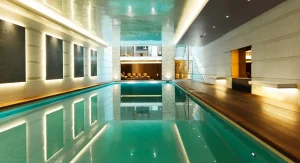
Your research reveals what story to tell—now light and frame it with intention. Layer ambient and accent lighting to sculpt architectural details. Position your camera to emphasize leading lines that guide viewers through spatial narratives. Bracket exposures to preserve highlight detail in Singapore’s abundant natural light. Frame foreground elements that create depth while showcasing the designer’s material palette and textural contrasts.
How to Include Guests Without Losing Your Architectural Focus?
When should human presence enhance rather than distract from architectural storytelling? Position guests where they reinforce scale and spatial relationships—silhouettes against floor-to-ceiling windows, figures ascending statement staircases. Keep them purposefully blurred through slower shutter speeds, establishing movement without competing details. Place subjects in thirds, never center-frame. Their clothing should complement, not clash with, your color palette. They’re compositional elements, not portraits.
Editing and Packaging Work That Wins Repeat Hotel Clients
How does your post-production workflow signal professionalism before a hotel marketing director even reviews the images? Deliver consistent color profiles across all spaces—lobby warmth shouldn’t clash with suite coolness. Name files systematically: SingaporeHotel_Suite_WideAngle_001.jpg beats IMG_4523.jpg. Package shots in curated folders by room type and perspective. Include both high-res TIFFs and web-optimized JPEGs. Your organized delivery demonstrates you understand their multi-platform publishing needs.